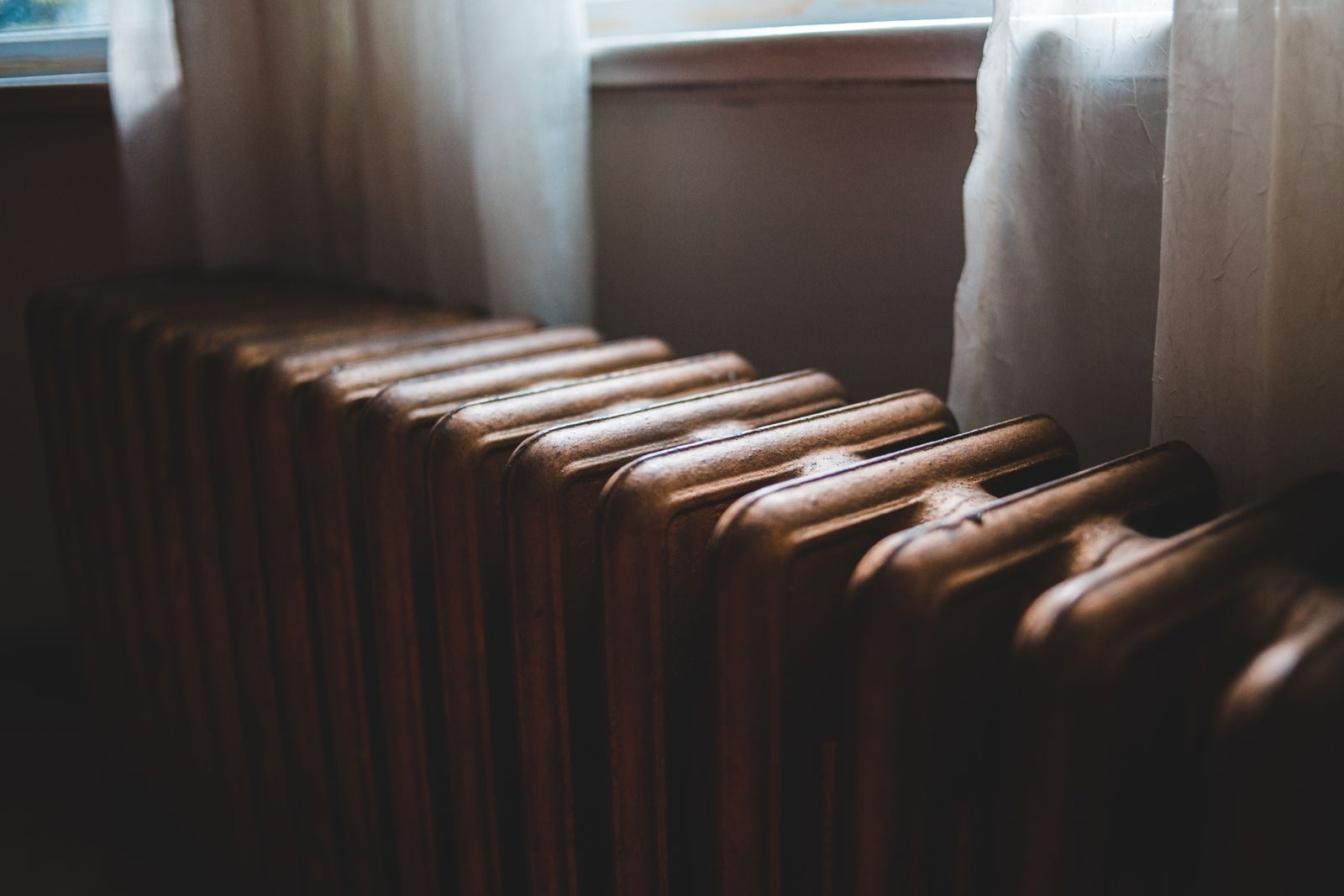
A landlord must provide a decent home (logement décent, the minimum housing standard set by French law), fitted with an installation that allows normal heating, complies with the rules and is in good working order. The 18°C rule, often presented as a general tenant's right, only applies if the building permit was filed after 1 June 2001. In an older home, the tenant must be able to heat the place normally, with no figure set in the law.
Annual servicing of an individual boiler and chimney sweeping remain the tenant's responsibility, unless the lease says otherwise. As for the gas price rise on 1 December 2026, the benchmark price published by the Commission de régulation de l'énergie (CRE, the French energy regulator) goes up by 5.8% including VAT: it creates no obligation for the landlord to compensate. We checked these rules again on 25 November 2026 against the official texts. The typical cases below are general situations, not files handled by the agency.
A decent home starts with a heating system that works
The landlord is required to provide a decent home under article 6 of the law of 6 July 1989 and decree No. 2002-120 of 30 January 2002. Among the required equipment is "an installation allowing normal heating", with an energy supply and a flue for combustion products, suited to the characteristics of the home. Heating equipment must comply with safety standards and be in good condition and working order.
This obligation concerns the installation itself, not how warm the occupant feels at any given moment. A broken radiator, a boiler out of order or an unusable flue put the matter on the landlord's side. Bleeding a radiator, replacing a seal or having the annual service done fall under tenant repairs (réparations locatives), so they are the tenant's job, unless the lease provides otherwise.
Typical case: a boiler breaks down on a Friday evening
It is 7 pm on a Friday in December. The individual boiler stops: no more hot water, no more heating.
The tenant informs the landlord or the agency without waiting for Monday, first by phone, then in writing (email, then recorded delivery letter). As long as the installation no longer allows normal heating, the landlord must restore it: this falls under the obligation to provide a decent home, not under a tenant's "minor repair".
Once the heating engineer has been, who pays depends on the cause:
- a breakdown due to wear, a fault in the appliance or an unsuitable installation remains the landlord's responsibility;
- a lack of routine maintenance (no annual service, filters never cleaned, radiators never bled) can be held against the tenant;
- if the lease states that the landlord arranges the servicing, that clause applies and the tenant does not have to pay for this service upfront.
While waiting for the repair, the tenant does not have to go without heating: an emergency portable heater is a practical measure. It does not settle the question of decent housing and must not hide an installation that is out of order.
The 18°C rule is not what many people think
Many tenants, and sometimes landlords, see 18°C as a legal minimum for every home. It is not. The Service Public page on the temperature of a home (Service Public being the French government's official information site), checked on 6 March 2026, clearly distinguishes two regimes, set out in articles R. 171-11 and R. 171-12 of the code de la construction et de l'habitation (the French building and housing code).
If the building permit was filed after 1 June 2001
The heating equipment must be able to maintain 18°C in the centre of each room. If that is not possible, the tenant can require the landlord to take action.
If 18°C is reached, the tenant cannot demand more. If they add a portable heater to go beyond that, the heater is at their own expense.
If the home is older
The tenant must be able to "heat themselves normally", in line with the minimum decent housing standards. The law has not defined what this means. It is the juge des contentieux de la protection (the district judge who hears tenancy disputes) of the court with jurisdiction over the home who decides, case by case.
In other words, in a building from the 1970s or 1980s, invoking "the 18°C" as an automatic right has no legal basis. That does not mean the landlord can leave the tenant in the cold: the installation must still allow normal heating and the equipment must work.
The 19°C ceiling, often mistaken for a minimum
In a heated home, the average temperature across all rooms is capped at 19°C. This ceiling is set by articles R. 241-25 to R. 241-27 of the code de l'énergie (the French energy code). A heating system that cannot exceed a 19°C average is therefore not faulty for that reason.
A room's temperature is measured in the centre, 1.50 m above the floor. The average for the home is weighted by the volume of each room. Service Public gives an example: a 20 m³ room at 18°C and a 25 m³ room at 19°C give an average of 18.6°C.
When the home is unoccupied for 24 to 48 hours, this upper limit drops to 16°C, then to 8°C beyond 48 hours. These are energy-saving ceilings, not minimum temperatures owed to a tenant who is at home.
Typical case: the home does not go above 16°C
The tenant says they are cold. A thermometer placed in the centre of the living room, 1.50 m above the floor, shows 16°C with the heating on.
In a home whose permit was filed after 1 June 2001, this reading, if confirmed in each room, gives a strong argument: the installation must be able to maintain 18°C. The tenant can require action.
In an older home, 16°C is not, on its own, an automatic breach. It is useful evidence to attach to the letter. The judge will look at the condition of the installation, the insulation, how the heating is used and the file as a whole. Nobody can promise the outcome in advance.
Before writing, it is best to check the obvious: valves open, boiler on, air vents not blocked and the reading taken correctly. A check can be carried out by the tenant or, at their own expense, by a professional.
What to do and what not to do
If the home is found to be underheated or overheated, the tenant first sends a recorded delivery letter with acknowledgement of receipt to the landlord or the agency, formally requiring them to fix the installation. If there is no reply, they can refer the matter to the juge des contentieux de la protection.
They must not stop paying their rent, in full or in part, on the grounds that the home is not decent. Service Public is unambiguous on this. Withholding rent unilaterally puts the tenant in arrears, even when their complaint may well be justified. If the disagreement persists, the commission départementale de conciliation (a free local conciliation board for landlords and tenants) can also be approached before going to the judge.
Boiler servicing: who pays, who does what
For an individual boiler running on oil, gas, wood, coal or several fuels, with an output of 4 to 400 kW, the tenant must have an annual service carried out. The same obligation applies to heat pumps and to heating appliances with ventilation. The lease may, however, provide that the landlord takes care of it, with the heating engineer of their choice.
For a communal boiler, servicing is the responsibility of the building's owner or of the syndicat des copropriétaires (the body of co-owners in a block of flats). In that case, the cost is included in the service charges. Our guide to service charges in a block of flats explains how these items are shared out.
The service takes place every calendar year: a service carried out in May 2025 must be followed by another before the end of 2026. After an appliance is replaced or installed, the first service is due at the latest in the following calendar year.
The heating engineer checks the appliance and the distribution and control systems, and cleans and adjusts them if needed. They assess the efficiency, the sizing (unless nothing has changed since the previous visit) and the carbon monoxide emissions. A certificate is issued within 15 days, possibly by email. It must be kept for at least 2 years.
The law provides for no fine if the service is not done. However, the landlord can deduct the cost of the service from the deposit, and the insurer can refuse to pay out after an accident involving a poorly maintained boiler. This is not only a contractual matter: a poorly maintained appliance, in a poorly ventilated home, exposes occupants to carbon monoxide poisoning, a gas that is invisible and odourless.
Chimney sweeping: a tenant repair and a safety issue
Sweeping the ventilation ducts and the flues for smoke and gases (boiler, fireplace, mechanical ventilation, for example) is a tenant repair. It is therefore the tenant's responsibility, unless the lease provides otherwise, as stated in the Service Public page on routine maintenance and decree No. 87-712 of 26 August 1987.
For a fireplace or a stove, sweeping is compulsory. It is carried out by a qualified professional. A certificate must be kept. Failing to comply can lead to a fine of €450.
Since 1 October 2023, the national minimum has been set by article R. 1331-71 of the code de la santé publique (the French public health code): sweeping takes place at least every twelve months. For a communal appliance, it takes place at least every six months, once of which during the heating season, with an exception for certain flues used only for gas. A local order can require several sweeps a year, one of them during the heating season. Service Public states that, in most départements, two sweeps a year are still required, one of them during the period of use.
In the Hérault, the règlement sanitaire départemental (the local public health regulations) published by the préfecture (the State's representative office in the département), an order of 9 May 1979 updated in August 2002, still provides for two sweeps a year for flues in regular use and only one for certain gas flues, lined flues or flues that have never carried smoke from solid or liquid fuels. This text predates the 2023 reform. Before using it as an argument in a dispute, the applicable rule should be confirmed with the town hall or the préfecture.
Typical case: a flue that has never been swept
A home with a fireplace has been occupied for two winters, without any sweeping certificate. The landlord or the insurer may find out when a claim is made or when the tenancy ends.
Sweeping was the tenant's responsibility, unless the lease said otherwise. The lack of a certificate exposes them to the €450 fine, to a possible deduction from the deposit and, above all, to the insurer refusing to pay out in the event of a chimney fire or poisoning. The landlord, for their part, has every reason to ask for the certificate: the installation must remain in good working order and the safety of the home depends on it. If the landlord has the sweeping done after a formal notice, the cost can then be charged to the tenant, within the limits of the lease and the regulations.
Damp and mould: a building defect or the way the home is used
When the windows stay shut all winter, damp problems appear. Not all mould is automatically the landlord's fault, and the reverse is not true either.
The 2002 decree is precise. A decent home must be weatherproof, protected against run-off water, rising damp and leaks, and protected against draughts. It must also allow sufficient ventilation: openings and ventilation devices in good condition, able to renew the air and remove moisture under normal occupancy.
The tenant, for their part, handles routine maintenance. They clean the air inlet and extraction vents. They air the home. They are not allowed to stop paying their rent if they consider the home not decent: they first write to the landlord or the agency. If the disagreement persists, they can refer the matter to the commission départementale de conciliation, then to the judge.
When water comes in through the building itself, the issue becomes one of water ingress. We have already explained, in another context, who pays for what when a rented home is flooded.
Typical case: two kinds of mould, two possible responsibilities
First situation: stains appear above the windows and in the bathroom. The air vents are partly blocked, washing dries in the living room and the windows stay shut for several days in a row. Condensation on the panes is visible every morning. Here, the way the home is used is the first suspect: the tenant must restore normal ventilation and keep the vents clean. That does not rule out checking, at the same time, that the mechanical ventilation system (VMC) works.
Second situation, a different one: the mould rises from the bottom of an outside wall or follows a trail beneath a window that does not seal properly. The home is aired, the vents are clear and an inspection reveals water ingress, rising damp or a VMC that is out of order. Here, the defect lies in the building. It is up to the landlord to carry out the work needed to restore a decent home.
Between the two, only a proper assessment can settle the matter: dated photos, the state of the vents, whether the ventilation works and possibly a professional's opinion.
Energy cut-offs during the winter ban: what is prohibited, what remains possible
The 2026-2027 trêve hivernale (the annual winter ban) runs from 1 November 2026 to 31 March 2027. It suspends evictions of tenants, subject to the conditions set out by Service Public, and it extends to gas and electricity cut-offs. We cover the eviction side in our article on the 2026-2027 winter ban.
In a main residence, a supplier cannot cut off gas or electricity for non-payment during this period. For electricity, the power supply can however be reduced, unless the household has shown that it receives the chèque énergie. This is decree No. 2008-780, article 5, as set out in the page on unpaid bills.
As the same page points out, water in a main residence cannot be cut off for non-payment, and this applies all year round, not only in winter.
Service Public also states that if the household is with EDF, electricity is maintained all year round. This is an indication from the official page, not a general legal rule that applies to all suppliers. For any other contract, the winter ban remains the reference period, with a power reduction still possible for households that do not receive the chèque énergie.
These rules concern the tenant's energy contract, when the heating is individual. They do not exempt anyone from paying their bills, nor the tenant from paying the rent. In case of difficulty, the supplier can offer a payment plan and the fonds de solidarité pour le logement (FSL, a local housing support fund) can be approached. A dispute with the supplier can be taken to the médiateur de l'énergie (the French energy ombudsman).
The chèque énergie, from €48 to €277
Who receives the chèque énergie and what it is for
An eligible household receives the 2026 chèque énergie (a State voucher towards energy bills), sent out from 1 April 2026. The amount ranges from €48 to €277, depending on the household's reference taxable income and composition, as noted in the Service Public news item updated on 1 April 2026.
The voucher is used to pay the home's energy bills (electricity, gas, heating oil, wood, for example) or certain energy charges in social housing, a logement-foyer (sheltered housing) or a care home for older people. It can no longer be used to pay for energy renovation work. "Works vouchers" issued before 15 February 2025 remain valid until their expiry date.
If the household believes it is eligible but has not received the voucher, it can still apply until 31 December 2026 on chequeenergie.gouv.fr. No government body asks for bank details to grant it.
For the tenant, there is an extra effect in winter: having shown that they receive the chèque énergie prevents the electricity power from being reduced for non-payment during the winter ban. The landlord does not have to deal with this voucher, unless they are a social landlord receiving it for energy charges. It is still in their interest to point a tenant in difficulty towards this scheme, rather than discover unpaid rent a few weeks later.
The gas price rise on 1 December 2026
There has been no regulated gas tariff since 1 July 2023. To help compare offers, the Commission de régulation de l'énergie publishes a benchmark gas price every month. It is not an offer that anyone can sign up to. Some contracts are, however, indexed to it.
On 1 December 2026, according to the CRE press release of 9 November 2026, this benchmark price rises from €194.90/MWh including VAT to €206.26/MWh including VAT, an increase of 5.8% including VAT. Only the supply component changes on that date.
The CRE puts the impact at €16 including VAT on average in December, for consumers whose offer is indexed to this benchmark price. At the end of 2025, around 40% of residential gas consumers had a fixed-price offer: this monthly rise does not affect them. The CRE also estimates that the 2026 annual bill of an average consumer rises by 11.8% compared with 2025, or €143 including VAT.
To give an idea of scale, the extra cost is €11.36 including VAT per MWh (206.26 minus 194.90). The CRE's €16 including VAT therefore corresponds to consumption of about 1.4 MWh over the month. This is an assumption for illustration, not the consumption of any particular home.
For a tenant with individual gas heating, the rise shows up on their bill, depending on whether their offer is indexed or fixed-price. For communal heating, it may be passed on later in the service charge provisions or the annual charge adjustment. In both cases, the landlord does not have to "compensate" for this change in energy prices, as long as the heating installation remains compliant and in working order.
Preparing the home before the first cold spell (seals, air vents, servicing) is still worthwhile: we have gathered some advice in our article How to get your home ready for winter. On the energy performance of the property, the energy performance diagnosis (DPE, the French EPC) remains the reference document, separate from the decent housing obligation regarding heating. Its calculation also changes on 1 January 2027: see our article on the electricity coefficient at 1.7 and the one on the new 2026 DPE label.
Frequently asked questions
Is the landlord required to heat the home to 18°C?
No, not in every home. This obligation to be able to maintain 18°C in the centre of each room applies to buildings whose permit was filed after 1 June 2001. In an older home, the tenant must be able to heat the place normally, with no figure set in the law. In all cases, the installation must allow normal heating and be in good working order.
Who pays for the annual boiler service?
For an individual boiler, the tenant does, unless the lease provides that the landlord takes care of it. For a communal boiler, it is the building's owner or the syndicat des copropriétaires. The certificate is issued within 15 days and must be kept for at least 2 years.
Can the tenant stop paying rent if the home is too cold or too damp?
No. Even if they consider the home not decent, they must not stop paying all or part of the rent. They first send the landlord or the agency a formal notice by recorded delivery letter with acknowledgement of receipt. If there is no reply, they can refer the matter to the commission départementale de conciliation, then to the juge des contentieux de la protection.
How many chimney sweeps are required in the Hérault?
The national minimum is at least one sweep every twelve months for an individual appliance and at least one every six months for a communal appliance, one of them during the heating season. A local order can require more. The Hérault public health regulations published by the préfecture still provide for two sweeps a year for flues in regular use, with exceptions for certain gas flues. As this text predates 2023, the town hall or the préfecture are the ones to contact to confirm the applicable rule.
What should be done if mould appears in winter?
First photograph the marks, check the air vents, air the home, then write to the landlord or the agency. If the problem comes from the way the home is used (blocked vents, windows rarely opened, washing drying in the room), routine maintenance is the tenant's responsibility. If it comes from the building (water ingress, VMC out of order, poor sealing), the work falls to the landlord. Rent remains due throughout these exchanges.
During the winter ban, can the supplier cut off electricity or gas?
In a main residence, gas and electricity cut-offs for non-payment are prohibited from 1 November to 31 March. The electricity power can however be reduced, unless the household has shown that it receives the chèque énergie. Water, for its part, cannot be cut off for non-payment at any time of year.
What landlords and tenants should sort out before the cold sets in
Once the texts have been read again, the split is simpler than it looks. The landlord owes a decent home, with a heating installation that is suitable, safe and in working order. The tenant owes routine maintenance, the annual service of an individual boiler (unless the lease says otherwise) and chimney sweeping, and keeps paying the rent even when making a complaint. The 18°C is a set threshold only for homes whose permit postdates 1 June 2001. The rest, including the gas price rise, is a matter for the energy contract, not a duty of compensation on the landlord's part.
This information does not replace personalised advice. In the event of a dispute, the agence départementale d'information sur le logement (ADIL, the local housing information agency) provides free information and the juge des contentieux de la protection decides.
If you already entrust the property management of your home to Alpaca Immobilier, report a breakdown or a defect to us in writing, with photos and, if possible, a temperature reading. Useful documents (lease, certificates, diagnostic reports) remain available in the client area. For a one-off question, you can also write to us via the contact page.