When we show a house in Saint-Clément-de-Rivière or Assas, the question of price per square metre comes up quickly. But another one comes up almost as often, slipped in between two rooms: "And where can you eat well around here?" It says a lot. Choosing to live north of Montpellier often means looking for a village pace, seasonal produce and a glass of Pic Saint-Loup on a terrace at the end of the day. Here is how we answer that question, drawing on our experience as agents who criss-cross these villages all year round.
A landscape of garrigue, vines and markets
Before talking about plates, you need to understand the setting. The villages to the north grew up at the foot of the Pic Saint-Loup, the sharp peak that dominates the whole horizon, in a landscape of Aleppo pines, vines and orchards. The Lez rises here, in the forest of Saint-Sauveur, before flowing through several villages and then Montpellier.
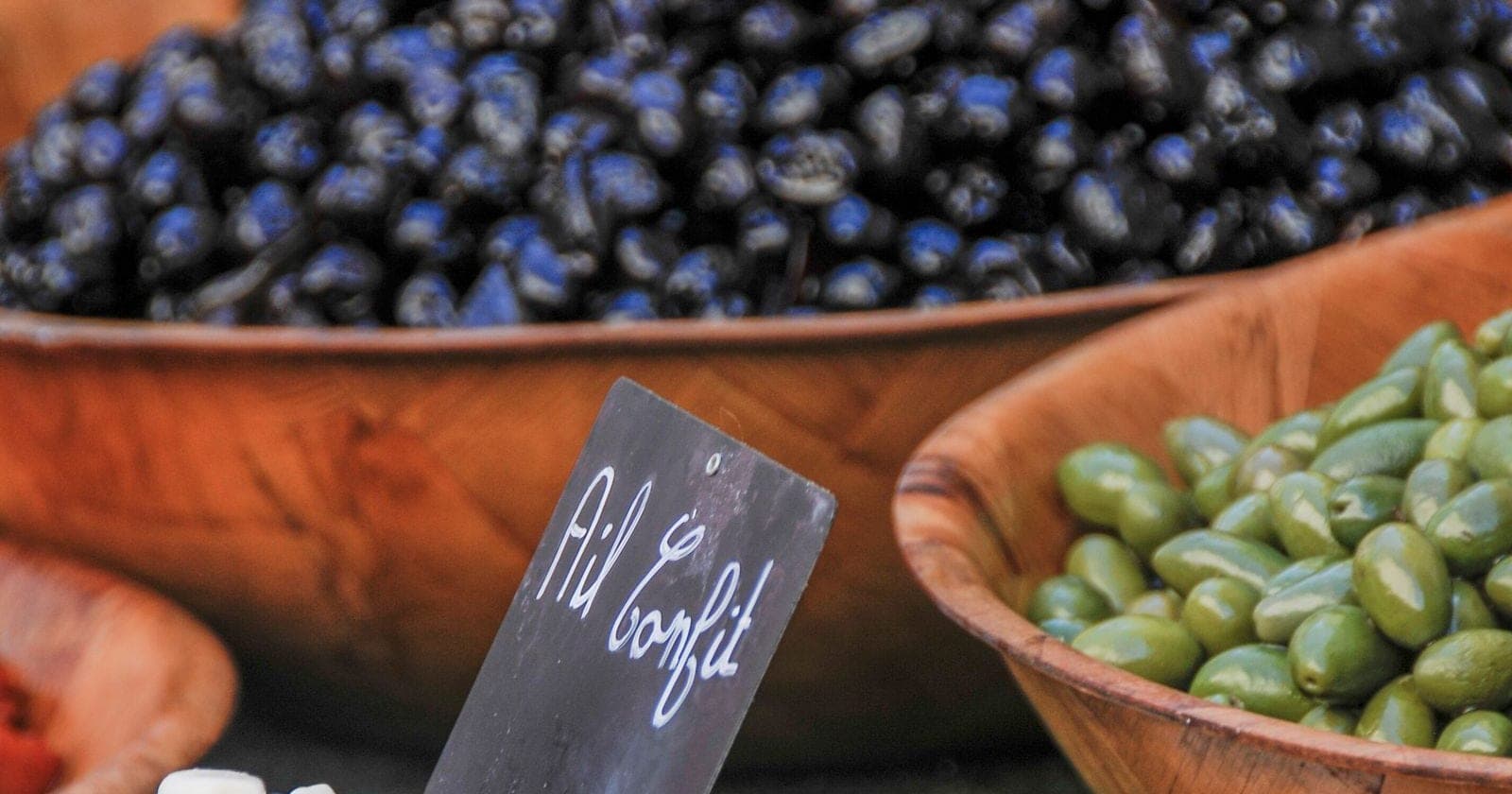
This terroir has a direct effect on what ends up on your plate. The Pic Saint-Loup AOC, which became an appellation in its own right in 2017, covers around fifteen villages in the Hérault and two in the Gard. Its reds and rosés, dominated by syrah with grenache and mourvèdre, are the natural companions of the region's tables. Add to that local olive oil, goat's cheeses from the garrigue, honey, field-grown vegetables and, in summer, everything the producers lay out on the village markets. Eating here means, above all, eating what grows a few kilometres away.
The kinds of tables we come across, village by village
Rather than give you a list of addresses that will be out of date in six months, we prefer to describe the families of restaurants we come across north of Montpellier. That is what really helps you get a feel for a village before you settle there.
The village bistro, at the heart of local life
This is the first category and often the most endearing. In Saint-Clément-de-Rivière, Prades-le-Lez or Assas, the bistro on the square or in the old centre is still the meeting point. Regulars come for an honest dish of the day, no-frills cooking that follows the market, and above all for the atmosphere: neighbours greeting each other, a terrace in the shade of a plane tree, staff who know the regulars. This kind of place is not after a gastronomic menu; it aims for good, consistent value. For many of the families we work with, it is exactly what they came looking for when they left central Montpellier.
Market cooking and producers' tables
The north of Montpellier lives to the rhythm of its markets. Around Prades-le-Lez and the neighbouring villages, several restaurants build their menu around what the market gardener, the winemaker or the farmer delivered that morning. A blackboard that changes every week, produce labelled by origin, generous portions: this is seasonal cooking, more polished than the classic bistro but still affordable. We happily recommend it to anyone who wants to taste the Hérault terroir without ceremony.
The more ambitious table, for special occasions
Scattered across these villages, there are also restaurants that go up a notch. A carefully designed setting, more elaborate presentation, a wine list that gives pride of place to estates from the Pic Saint-Loup and the Terrasses du Larzac. These are the places we keep for a birthday, a signing at the notary's to celebrate or a dinner that takes its time. Without naming names at random, rest assured that this level does exist in the north and that you do not have to go back into town for it.
Terraces on the Lez and open-air dining
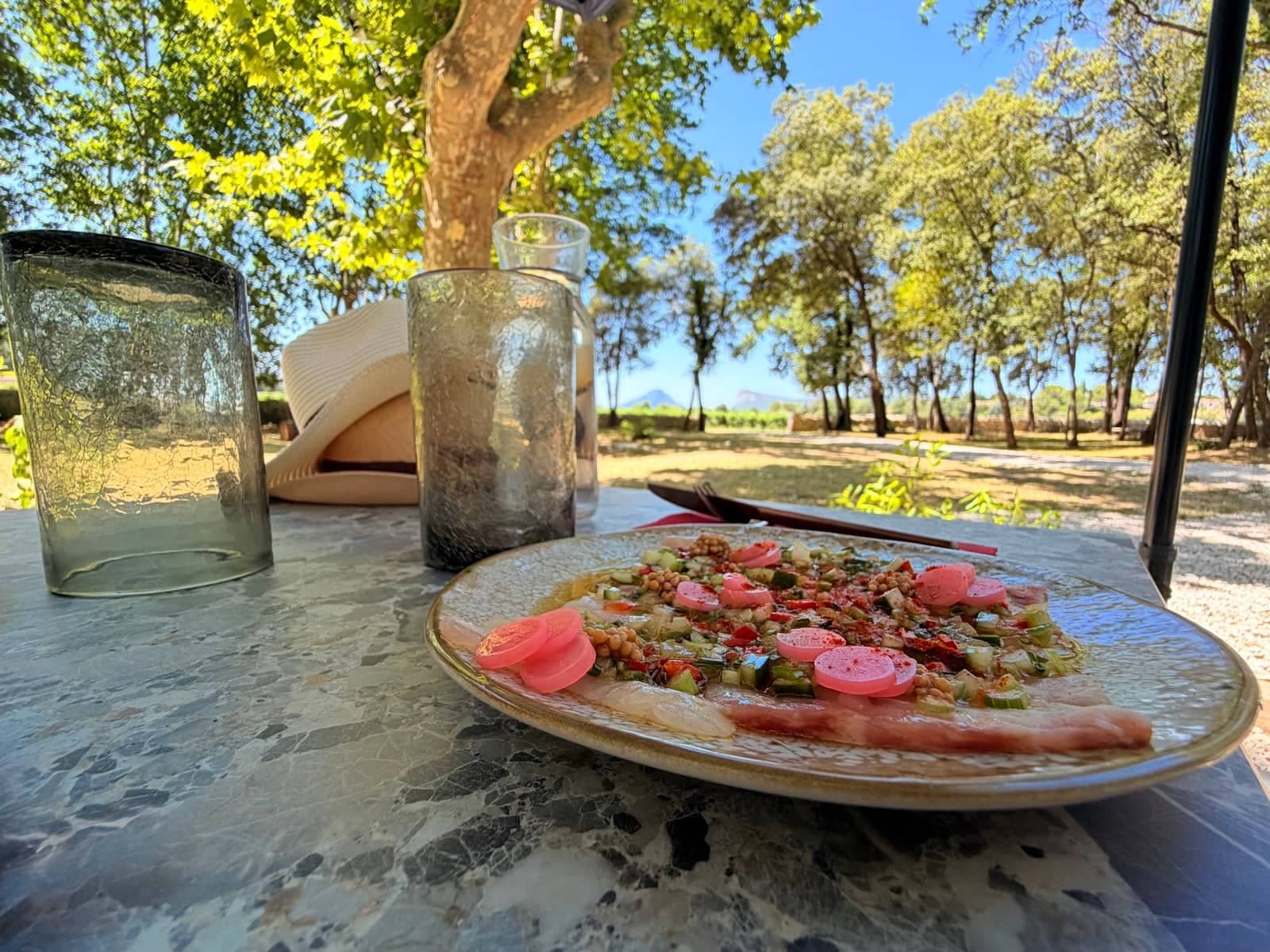
In summer, this may well be the top category. Montferrier-sur-Lez, perched 150 metres up on the remains of an ancient volcano, offers superb views of the Pic Saint-Loup, the Hortus and the hills of the Cévennes. Along the river, open-air cafés (guinguettes) and shady terraces fill up as soon as the fine weather arrives. You eat simply, a glass of well-chilled rosé in hand, your feet almost in the water. These are the moments our clients describe, years later, as the real reason they moved here.
Wine estates that welcome visitors
The last family is specific to this terroir: the cellar that opens its own table or hosts winemakers' meals. Among the rows of vines, with the Pic as a backdrop, several estates offer guided tastings, boards of local produce and, depending on the season, lunches by reservation. It is a direct way to understand what makes the appellation unique: its climate, cooler and wetter than the rest of Languedoc, and its limestone garrigue soils. A lovely Sunday outing, within cycling distance of most of the villages.
How we suggest choosing where to eat
Our first rule of thumb comes down to one word: season. North of Montpellier, the best places are those that follow the producers' calendar. A very long menu, identical in January and August, is rarely a good sign. Conversely, a short blackboard that changes often points to a kitchen that buys fresh.
The second marker is the wine list. A restaurant in the area that has no room for Pic Saint-Loup estates is missing out on its own terroir. Several local winemakers on the list, some of them biodynamic, say a lot about how serious the place is.
Finally, trust village word of mouth more than online ratings. Ask the baker, the wine merchant or your future neighbour: in these villages where everyone knows each other a little, a restaurant's reputation travels fast and is put to the test at the table. It is, in fact, one of the quiet pleasures of life here, this economy of local recommendations.
Eating well, a real factor when deciding where to live
We see it every time we help a client: the quality of the restaurants and markets weighs on the decision to buy, almost as much as the school or the commute. A village where a bistro is packed at lunchtime, where the market overflows with producers and where passionate wine merchants rub shoulders is a village that is alive. And a living environment remains, in the long term, a valuable asset for a property.
If the local way of life appeals to you, discover our page on Saint-Gély-du-Fesc, one of the most sought-after villages in the north, with its shops, restaurants and market. And if you are wondering what your house is worth in this tight market, a valuation carried out by our agency will give you a reliable basis, terroir included.