There is a ritual that many of our clients discover after settling north of Montpellier and never give up: the Saturday-morning trip to the market. Basket in hand, you wander along the aisles, taste an olive, and chat about the weather with the grower who planted his tomatoes a few kilometres away. Between the Pic Saint-Loup and the banks of the Lez, the weekly markets are far more than a shopping chore. They are gatherings where the area tells its story, one basket at a time.
A tradition alive and well from one village to the next
Every town in the area has its market, with its own atmosphere and its own day. In Saint-Gély-du-Fesc, the open-air market livens up the Esplanade du Devois two mornings a week, on Thursday and Saturday. On Saturday, some sixty traders and artisans set up their stalls: it is the big weekend event, where you bump into your neighbours as often as your favourite greengrocers.
In Prades-le-Lez, the market is held on Monday morning, a pleasant way to start the week with fresh produce. In Assas, the event takes on a summery feel with an evening food market around the fountain, where people come mainly for a casual dinner and to enjoy the cool of the evening.
Market days, town by town
So that you don't turn up basket in hand on a day with no stalls, here are the weekly markets in the area, as we checked them in spring 2026.
| Town | Day | Hours | Location |
|---|---|---|---|
| Saint-Gély-du-Fesc | Thursday and Saturday morning | 8am - 1pm | Esplanade du Devois |
| Prades-le-Lez | Monday morning | 7.30am - 1pm | Village centre |
| Grabels | Tuesday morning | 7.30am - 1pm | Place Jean Moulin |
| Castelnau-le-Lez | Tuesday and Saturday morning | 7am - 1pm | Place de l'Europe, old town |
| Assas | Friday evening | 6.30pm - 9pm | Esplanade, around the fountain |
| Montferrier-sur-Lez | Saturday morning | 8.30am - 12.30pm | Place des Grèses, under the trees |
| Saint-Clément-de-Rivière | Sunday morning | 8am - 1pm | Boulidou car park |
| Clapiers | Sunday morning | 8am - 1pm | Esplanade Jules Ferry |
| Jacou | Sunday morning | 8am - 1pm | Esplanade de l'Hôtel de Ville |
| Teyran | Sunday morning | 8am - 1pm | Place de la République |
| Combaillaux | Sunday morning | 8am - 1pm | Place de la Fontaine |
Sunday morning is the big market day in the area: five towns hold their market at the same time, which gives you a choice of atmosphere, from the village of Combaillaux and its forty to sixty stallholders to the more urban esplanade in Jacou. By contrast, Monday in Prades-le-Lez and Friday evening in Assas are quieter affairs, popular with those who avoid the crowds.
These days change with the seasons and with council decisions. We keep all the markets in the metropolitan area up to date, with exact locations and a search by day, on our page of market days in and around Montpellier. The market in Le Crès, at the Mas du Pont, brings together around twenty producers, but its day varies: a call to the town hall remains the safest bet.
What goes into your basket
The real pleasure of these markets lies in the quality of what the Hérault produces. Here, the land lives up to its promise right down to the plate.
Pic Saint-Loup wines
It is impossible to talk about the north of Montpellier without mentioning its vineyards. The Pic Saint-Loup appellation, one of the most highly regarded in the Languedoc, stretches across the hillsides overlooking the area. The reds are structured, driven by Syrah and Grenache, with the particular freshness that comes from cooler nights at the foot of the massif. Many winemakers sell their bottles direct, at markets or at the estate. A tasting on the spot is worth more than any tasting notes.
Pélardon and goat's cheeses
Pélardon, a small raw-milk goat's cheese with protected designation of origin (AOP) status, is a Languedoc signature. Fresh, it is mild and milky; aged, it develops stronger, nutty notes. On the stalls, producers often offer several stages of ageing, enough to put together a cheeseboard that covers the full range of flavours.
Olive oil, honey and seasonal fruit
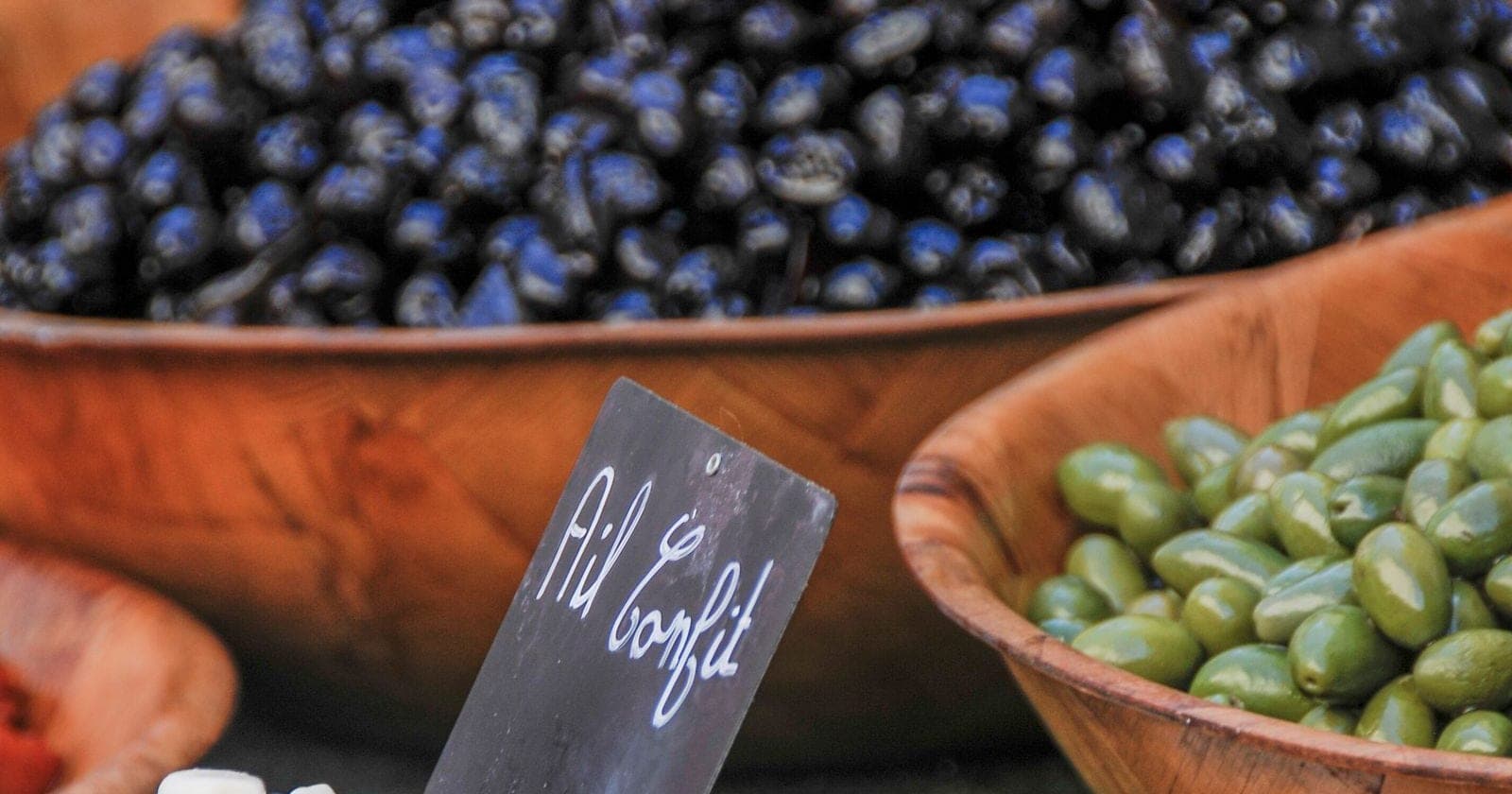
The olive tree has been part of the Hérault landscape since Antiquity, and local olive oil, fruity and fragrant, is easy to find direct from producers. Alongside it, garrigue honey, made from thyme or rosemary, quite literally captures the scents of the surrounding hills. The stalls also hold some fine artisanal surprises: sourdough bread, tapenades, prepared olives and homemade jams, treats that supermarkets struggle to match. And then there is the seasonal fruit and veg: apricots and melons when summer comes, squashes and chestnuts in autumn, not forgetting the sun-ripened tomatoes that make all the difference in a July salad.
The market, a way of life as much as a place to shop
What strikes newcomers is the place the market holds in the rhythm of the week. You rarely rush through it. You have a coffee on the terrace next door, let the children choose a piece of fruit, and leave with the name of a good restaurant passed on by a producer. The market creates the sense of community that big cities often lack, and that families and new retirees alike are looking for when they come to live here.
This conviviality is also part of what gives a neighbourhood its value. When we work with buyers, the question of local life comes up almost every time: is there a market within walking distance, thriving shops, real life at the weekend? North of Montpellier, the answer is usually yes, and it is an asset we enjoy showing during viewings.
Does a market add anything to the price?
We are asked this regularly, and the answer calls for nuance. A weekly market does not show up directly in a price per square metre. What it signals, on the other hand, matters a great deal: a town that holds a market all year round has a lively centre, organised weekend parking and a network of local shops that has survived the out-of-town retail parks. It is these factors, not the stall itself, that support value over time.
Above all, we see an effect on liquidity. For comparable properties, one located a ten-minute walk from a centre that buzzes on Sunday mornings finds a buyer more quickly, and negotiations are shorter. For a seller, this is a point to put in the listing rather than leave to be discovered by chance during a viewing.
For a buyer torn between several towns in the area, the market is an excellent indicator. A morning spent in Combaillaux on a Sunday, then in Castelnau-le-Lez on a Saturday, tells you more about a village's atmosphere than any price sheet. We always recommend this exercise before making a decision: quality of life is checked on the ground, not on a comparison table.
Our tips for making the most of it
A few simple habits change the experience. Come early if you are after the finest produce, or later if you prefer to haggle over the last crates. Bring your own basket or reusable bags; most producers appreciate it. Take the time to chat: it is by asking questions that you learn the best way to cook a forgotten variety of squash or to keep a cheese. And keep some change on you, as it is handier at some small stalls. Week after week, you will end up with your regular producers, the ones who put the last apricots aside for you or slip you a cooking tip: that is when the market truly becomes yours.
Finally, let yourself be surprised. A market changes throughout the year, and the spring asparagus grower gives way to the autumn mushroom seller. It is this seasonality, this direct contact with those who work the land, that makes these mornings so precious.
Are you thinking of settling north of Montpellier and want to know which towns best suit your way of life? The teams at our agency know every village, its markets and its favourite spots, and will be happy to point you towards the setting that suits you.