It is easy to assume that pupils from French lycées abroad arrive in France on familiar ground. They have studied the French curriculum, sat the French baccalauréat, read the same authors as their future classmates. Then they land and discover that none of it explained how to open a bank account, or why the studio flat they had just viewed went to someone else while they were gathering their documents. Wara lived through that gap. She turned it into a service.
A vast network, a transition that is anything but
The network of French schools abroad brings together 612 schools in 138 countries and teaches more than 400,000 pupils. A third of them are French; the remaining two thirds are of other nationalities. Every year, a significant share of these school leavers go on to higher education in France.
For course applications, everything is in place: Parcoursup, advisers, fairs, information sessions. For settling in, almost nothing. No institution takes charge of the part that actually decides how the first months go: finding a home, opening an account, registering, getting insured, understanding who you are dealing with and in what order.
That blind spot is exactly what Wara ran into head first.
"I had everything I needed, except the instructions"
Wara grew up in La Paz, Bolivia. She did all her schooling at the Franco-Bolivian lycée, "le Franco" to those who went there. She arrived in France in 2014 for higher education. Her academic record was strong, her family supported her, and French had been her language of schooling since nursery. On paper, nothing should have gone wrong.
"I couldn't understand why I kept losing flats. I answered the listings, I sent the documents they asked for, and two days later I got a refusal. It wasn't about budget. It was because I wasn't there in person, my guarantor lived abroad and I didn't yet have a French bank account."
The first weeks followed a pattern we have since heard from most of the students we support. Viewings to turn down because you are not yet in the city. A bank asking for proof of address when the address depends on the bank. A mobile operator refusing a contract without French bank details (RIB). A guarantor eight thousand kilometres away, whose payslips mean nothing to a French landlord.
"I got there in the end, but I lost two months on procedural questions. Nobody had told me what order to do things in."

From lived experience to a method
What separates an anecdote from a skill is repetition. Wara went through the process again for classmates, then for acquaintances, then for the brothers and sisters of former pupils from the network. Over time a method emerged: an order of operations, a list of documents, negotiating reflexes, a way of presenting an application so that it goes to the top of the pile.
It was also then that she realised how much it costs when information arrives too late. The Visale guarantee, public and free of charge, can be requested as soon as the visa is granted, even before finding accommodation. It replaces the French guarantor that most international students do not have. Almost none of the students she helped knew about it when they needed it.
That method is what structures our service today. It explains choices that might seem arbitrary.
Why we view properties ourselves, with photos and video every time, rather than sending a list of listings. Because a student six thousand kilometres away cannot judge whether a flat is overlooked or how noisy the street is from three wide-angle photos.
Why we build and defend the application rather than simply passing it on. Because an application has to be argued for, especially when the profile falls outside the landlord's usual boxes.
Why the settling-in formalities are sold individually rather than as a package. Because needs differ radically depending on whether a student is French or not, holds a grant or not, has somewhere to stay for the first few days or not. A single flat fee would have charged everyone for what only some need.
And why a WhatsApp line always comes with the first thirty days. Because the questions that genuinely block people come in the evening, on a Sunday, in the form of a photo of an incomprehensible form.
What we chose not to do
A service is defined as much by what it leaves out. We ruled out three things.
Procedures relating to residence permits, health insurance and family benefits. These are long procedures, dependent on offices over which we have no control, and promising a timeframe would amount to lying.
A promise to recover the security deposit. We chase, we argue the case and we follow the file through to the end. We do not guarantee an outcome that depends on a third party.
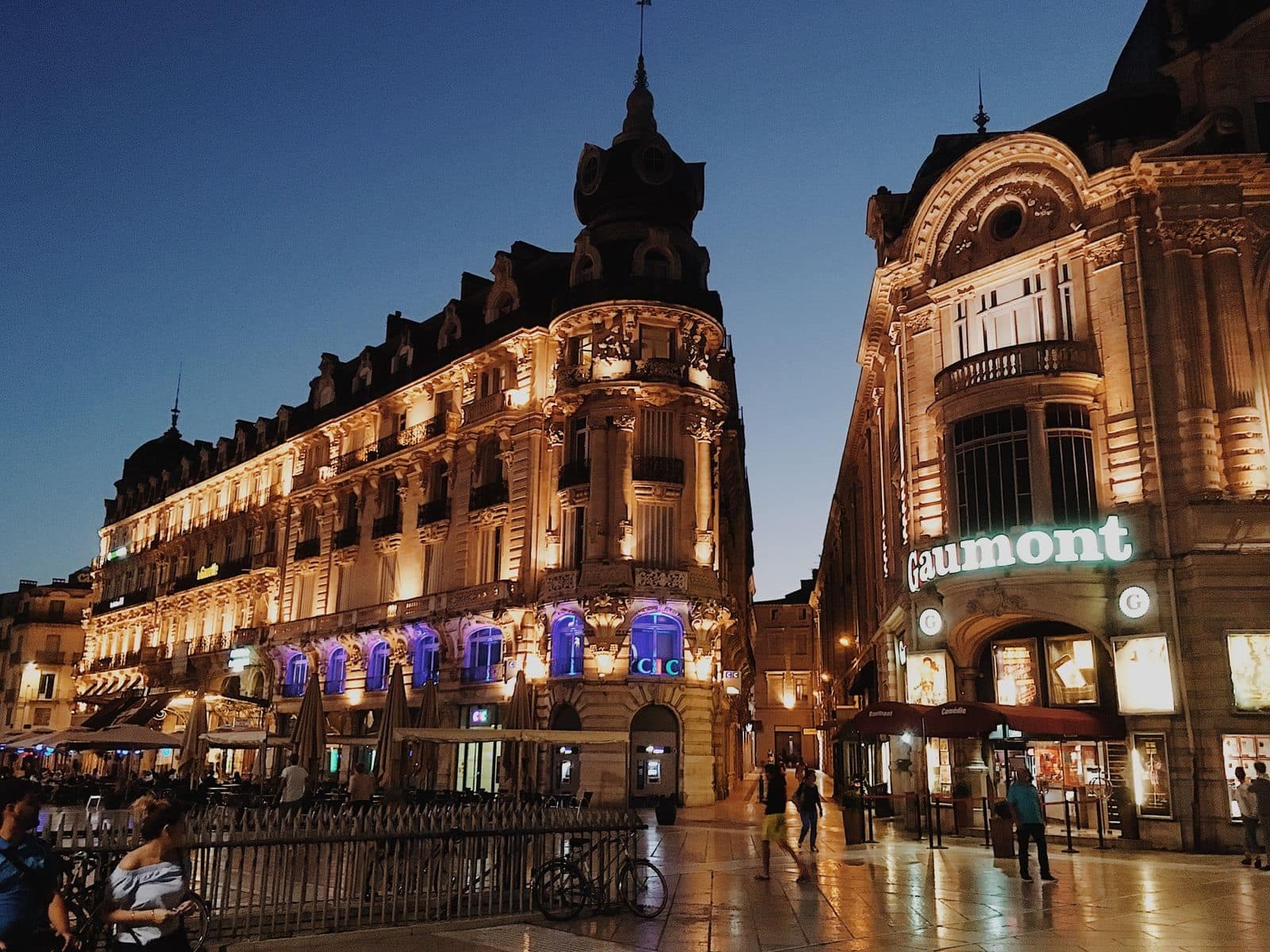
And opening straight away in every university city. We know Montpellier, its neighbourhoods, its landlords and its rent levels. Elsewhere, we would be one more intermediary, not a professional on the ground.
Trust you can check
One last point, which matters more than anything else in this business. International students are a favourite target of fake listings and fake agents: someone at a distance, in a hurry, with no local bearings, who pays a deposit before seeing anything.
Alpaca Immobilier holds the professional licence T (carte professionnelle T) issued by the CCI de l'Hérault under number 3402 2024 000 000 002 and is registered with ORIAS, the French register of insurance intermediaries, under number 25006799 for insurance distribution. These numbers can be checked publicly, and we encourage you to do so, with us as with anyone else.
It is also why we take no payment for the accommodation search before the lease is signed. The law requires it, and that constraint protects first and foremost the person paying.
Details of the packages and services are on the student concierge service page. To understand how the formalities fit together, we have published a guide on the order in which to deal with them.