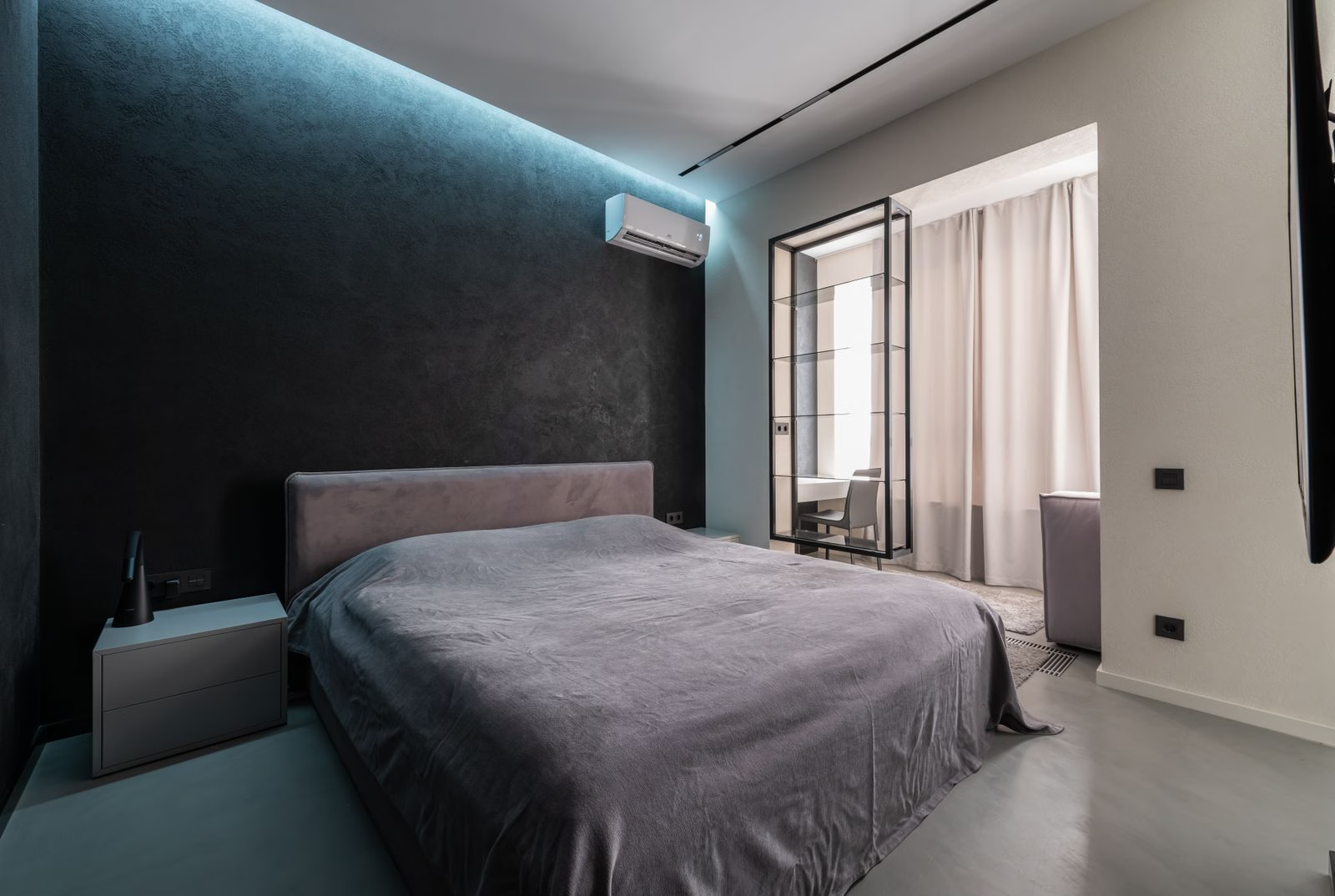
In Montpellier, summer is no longer up for debate. Heatwaves last longer, tropical nights are more frequent, and air conditioning has gone from optional comfort to a genuine factor in choosing a property. On our viewings north of Montpellier as well as in the city centre, it has become one of the first questions buyers ask: can AC be installed here, and on what terms?
The answer depends mainly on the type of home, the rules of your co-ownership or your town, and where the property is located. A flat in the Écusson has nowhere near the same room for manoeuvre as a villa in Saint-Clément-de-Rivière. Here is what you need to know before you start.
AC, a selling point that carries more and more weight
On the Montpellier market, an air-conditioned property sells and lets faster, no question. Buyers find it easier to picture themselves living there when they know they can live comfortably from June to September. Buyers moving from northern France or from abroad, who are discovering our summers, pay particular attention to it.
Thermal regulations point the same way. Since RE2020 (France's 2020 environmental building standard), new builds must meet a summer comfort indicator, which pushes developers to take extreme heat seriously. And the DPE (diagnostic de performance énergétique, the energy performance certificate every seller or landlord must provide) now includes a section on summer comfort. A well-insulated home therefore ticks one more box for a buyer.
That said, installing AC is not just a matter of ordering a unit online. It is better to understand how each system works, then check what your home actually allows.
The main types of air conditioning
Single-split
This is the most common system in flats. A wall-mounted indoor unit and an outdoor unit, connected by refrigerant piping. It cools a single room, usually the living room or the main bedroom. It is often the first choice when you want to treat the living space without taking on major works.
Most single-split units sold today are reversible: they heat in winter and cool in summer. One appliance, two uses.
Multi-split
Same principle, except that a single outdoor unit serves several indoor units, generally up to five. This is the solution we recommend for a large flat or a house where you want to cool the living room and two or three bedrooms. The advantage is that there is only one unit to fit outside, so only one sensitive point on the façade. On the other hand, the installation costs more and calls for a more detailed technical survey.

Ducted
A ducted system is invisible. The indoor units are hidden in the loft or a suspended ceiling, and the air comes out through discreet vents in each room. Visually, nothing sticks out, which really counts when you sell a house. The trade-off is that you need available ceiling height and an installation planned in advance, ideally during a major renovation.
Portable air conditioner
The monobloc unit on wheels requires no works, no outdoor unit and no permission. A simple exhaust hose goes through a window left ajar. It is less efficient than a split and noisier, but it is sometimes the only option left, particularly when the co-ownership or the heritage area forbids any change to the façade. We come back to this below, because the situation affects many people living in the centre of Montpellier.
Air conditioning or heat pump: what is the difference?
The question comes up often during viewings and deserves a proper answer: a reversible air conditioner is a heat pump. It is known as an air-to-air heat pump (PAC air-air). The appliance draws heat from the outside air to warm the home in winter and reverses the cycle in summer to cool it. Single-split, multi-split, reversible ducted: they all belong to this family.
The air-to-water heat pump is in a different category. It feeds a central heating circuit and hot water production, and is often paired with underfloor heating. Some models provide a little cooling in summer, but that is not their strength. If your goal is dealing with summer heat, look at the air-to-air heat pump, in other words reversible AC.
The rules in a flat: go through the co-ownership
This is where many projects become complicated. As soon as your installation affects the façade, a balcony or a visible part of the building, you are no longer within your private unit. And the façade is a common part.
In practice, fixing an outdoor unit to the wall, to a balustrade or below a window changes the external appearance of the co-ownership. You therefore need the consent of the general meeting (assemblée générale), voted in accordance with the rules. Without that vote, a co-owner or the managing agent (syndic) can require you to remove the unit and restore the façade, sometimes years later. We have seen sales stall over exactly this detail.
A few things to do before ordering anything:
- Read the co-ownership rules (règlement de copropriété). Some ban outdoor units on the façade outright; others simply regulate their position or colour.
- Put the item on the general meeting agenda. A project presented properly, with a photo and a precise location, goes through far more easily than a vague request.
- Think about noise. The outdoor unit must not disturb the neighbours. The French Public Health Code (code de la santé publique) regulates neighbourhood noise, and an AC unit badly placed under a window quickly turns into a dispute on the landing.
- Check with the town hall. A prior declaration of works (déclaration préalable de travaux) is often required as soon as a visible element appears on the façade.
If the co-ownership says no, all is not lost: a portable air conditioner remains an option, and there are a few indoor units with no outdoor unit, even if their performance is lower.
The rules for a detached house
In a house you are on your own property, but not alone in the world. A few rules still apply.
A prior declaration of works at the town hall is required as soon as the installation changes the external appearance, which is the case for a unit fitted on a façade visible from the street. The form is simple and processing takes around a month.
Then there are the neighbours. Here again, noise is the problem. An outdoor unit pressed against the fence, facing the neighbour's terrace, is a guaranteed recipe for a dispute. It is better to place it well away from the boundaries, take care with anti-vibration mounts and avoid corners that bounce the sound back.
On the technical side, the installation must be carried out by a professional holding the certificate of capacity (attestation de capacité) to handle refrigerants such as R32. This is not a mere formality: it is what ensures a compliant installation and a warranty that holds up the day something goes wrong. One last point: air conditioners and heat pumps with an output between 4 and 70 kW are subject to mandatory servicing by a professional at regular intervals. Worth knowing when you buy a house that is already equipped.
The special case of Montpellier's historic centre
The heart of Montpellier, the Écusson and its surroundings, is a protected heritage area. The stone façades, medieval lanes and private mansions (hôtels particuliers) are all governed by a protection plan, and the slightest visible project comes under the scrutiny of the Architecte des Bâtiments de France (ABF, the state architect responsible for heritage areas).
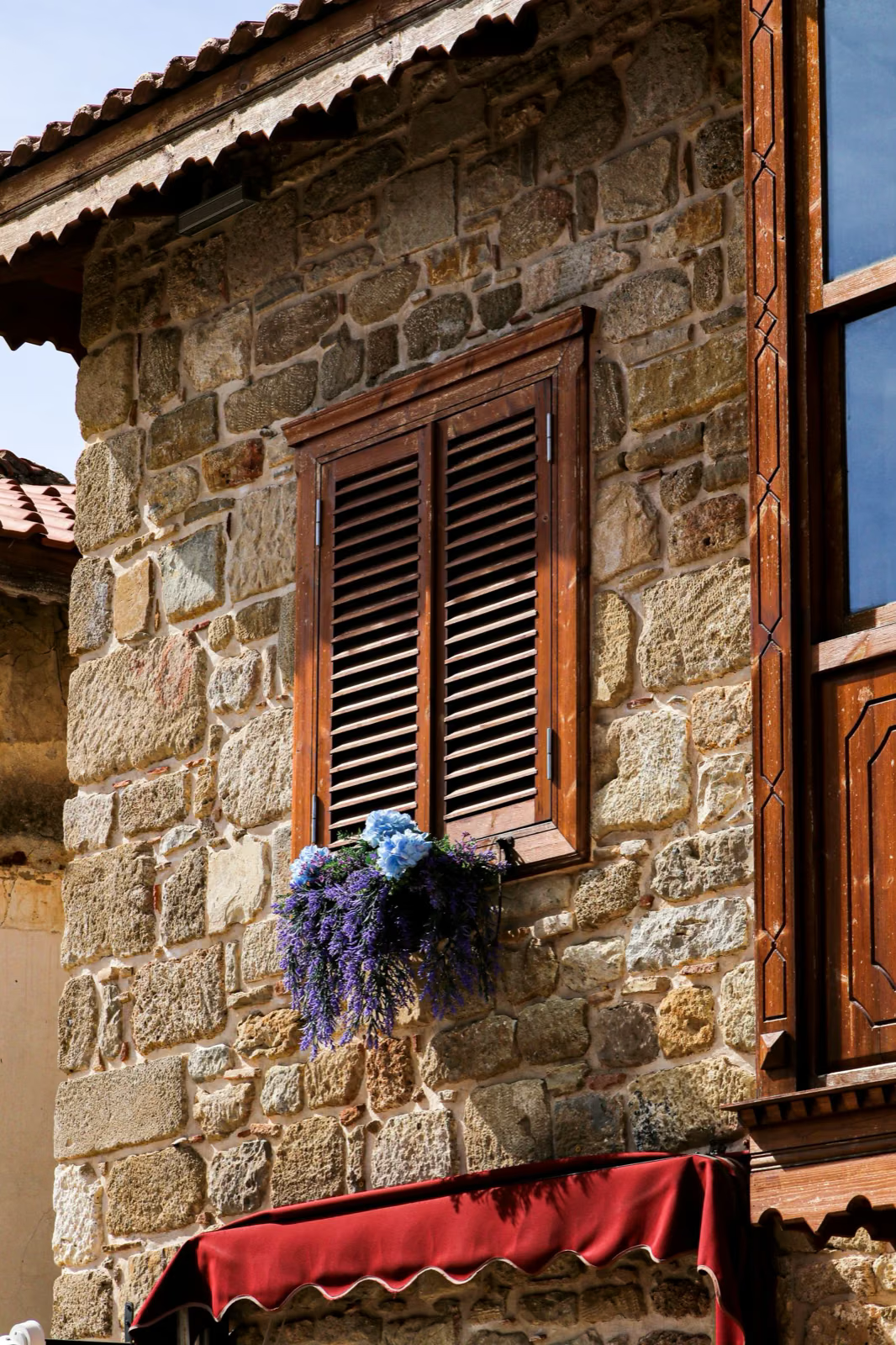
Put simply, hanging an outdoor unit on a street-facing façade has very little chance of being approved. The ABF looks after the harmony of building frontages, and a white box fixed to old stone almost never gets through. Your project is not dead, though; you just need to be resourceful:
- Move the outdoor unit to an inner courtyard or a part of the building not visible from public space.
- Install it on the roof or on a hidden terrace, when the layout allows.
- Fall back on a portable air conditioner, which does not touch the building.
Before buying in the centre, we always advise checking what the property really allows. A beautiful flat in the Écusson where no cooling solution is possible should be negotiated accordingly. It is exactly the kind of point we look at closely during a serious valuation of the property.
Which air conditioner to choose for your home
Here is how we sum things up for our clients, depending on their situation.
| Your home | The most suitable solution |
|---|---|
| House with a loft or renovation under way | Reversible ducted system, invisible and adds value |
| House or large flat, several rooms | Reversible multi-split, a single outdoor unit |
| Flat, one room to cool, façade installation allowed | Reversible single-split |
| Co-ownership or historic centre where nothing can be fitted | Portable air conditioner |
For the last case, the most common one in town, two well-rated models that are easy to find are worth a look. These are units you set up yourself, without touching the façade or asking the general meeting for anything.
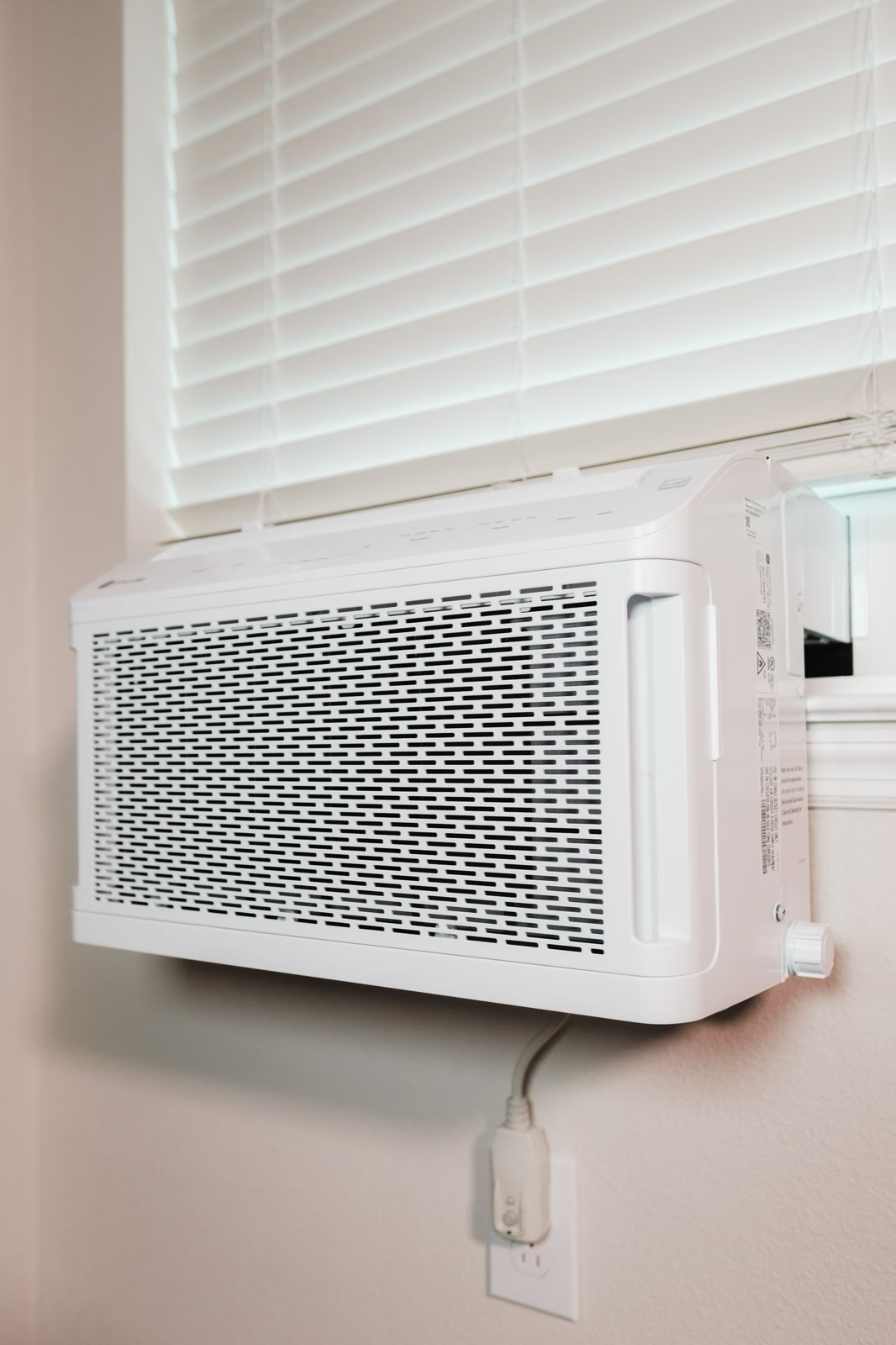
The MIDEA 9000 BTU silent model does the job: good long-term feedback from buyers, four functions (cooling, fan, dehumidifying, night mode), a window kit included and app control. For a living room or bedroom up to 25 m², it is a safe bet. You can find it here: MIDEA 9000 BTU portable air conditioner on Amazon.
The Olimpia Splendid Dolceclima Slim focuses instead on compactness and slim design. It fits easily into a flat where every square metre counts. Energy class A, built-in Wi-Fi, a well-known Italian brand: it slips along a wall without cluttering the room. See it here: Olimpia Splendid Dolceclima Slim on Amazon.
These two links are affiliate links. If you place an order, we may receive a small commission at no extra cost to you.
Air conditioning and property value
Installing AC is not only about personal comfort. Whether you sell or let, a cooled home stands out, especially in an area like ours where summer weighs heavily. A well-integrated ducted system or a recent multi-split reassures buyers and shortens the time to sale.
The reverse is also true, and we see it regularly. A flat where no solution is possible, because the co-ownership blocks it or the ABF refuses, loses a selling point against an equipped property. Better to know before signing, so you can adjust your offer. If you are preparing a sale, it is a subject to look at in the same way as the works to plan before putting a property on the market.
And to manage it all day to day, starting with thermostats and scheduling, our article on the connected home and home automation rounds off the subject nicely.
In summary
Air conditioning in Montpellier is above all a matter of common sense. In a house, you have some latitude, provided you declare your works, look after your neighbours and use a certified installer. In a flat, everything depends on the co-ownership as soon as the façade is involved. And in the historic centre, heritage rules set their limits, which a portable air conditioner can often get around.
Planning to buy or sell in Montpellier or its surroundings? We know the constraints area by area, from the city centre to the towns in the north. Let's talk about your project, and we will tell you what each property really allows.