
A recent decision from the Court of Cassation of September 11, 2025 (no. 23-17.751) clarifies the situation: even in the absence of explicit mention in the deed of sale, the seller can be held liable under the "obligation to deliver conforming goods."

The legal framework: the obligation to deliver conforming goods
A sale is an agreement on the thing and the price. Before this decision, it was already established that according to articles 1603 and 1604 of the Civil Code, the seller of a thing (including real property) must:
-
deliver what they sold (art. 1604);
-
guarantee the property (art. 1603) so that it is in compliance with what was agreed and is in compliance with applicable regulations - unless otherwise stipulated. In the decision of September 11, 2025, the Court of Cassation reminded us that:
"By virtue of their obligation to deliver, the seller must deliver a thing in compliance with the agreement of the parties and, unless otherwise stipulated, with applicable regulations."
Thus, there is indeed a direct link between the administrative/planning compliance of the property and the obligation to deliver.
The September 11, 2025 decision no. 23-17.751 specifies that:
-
The buyers objected that work had been carried out without a building permit; they argued that the seller should nonetheless guarantee planning compliance.
-
The Court of Cassation overturned the court of appeal which had rejected the claim by considering that these irregularities fell under the warranty for latent defects or did not fall within the obligation to deliver.
-
For the Court, the fact that a property does not have all planning authorizations or does not comply with regulations can constitute a breach of the seller's obligation to deliver.
-
Important: this applies even if the irregular work was not carried out by the seller themselves and even if the deed of sale does not explicitly mention planning compliance or the existence of a building permit.
Impacts for the seller
For a seller (individual or professional) of a real estate property, this decision implies the following:
-
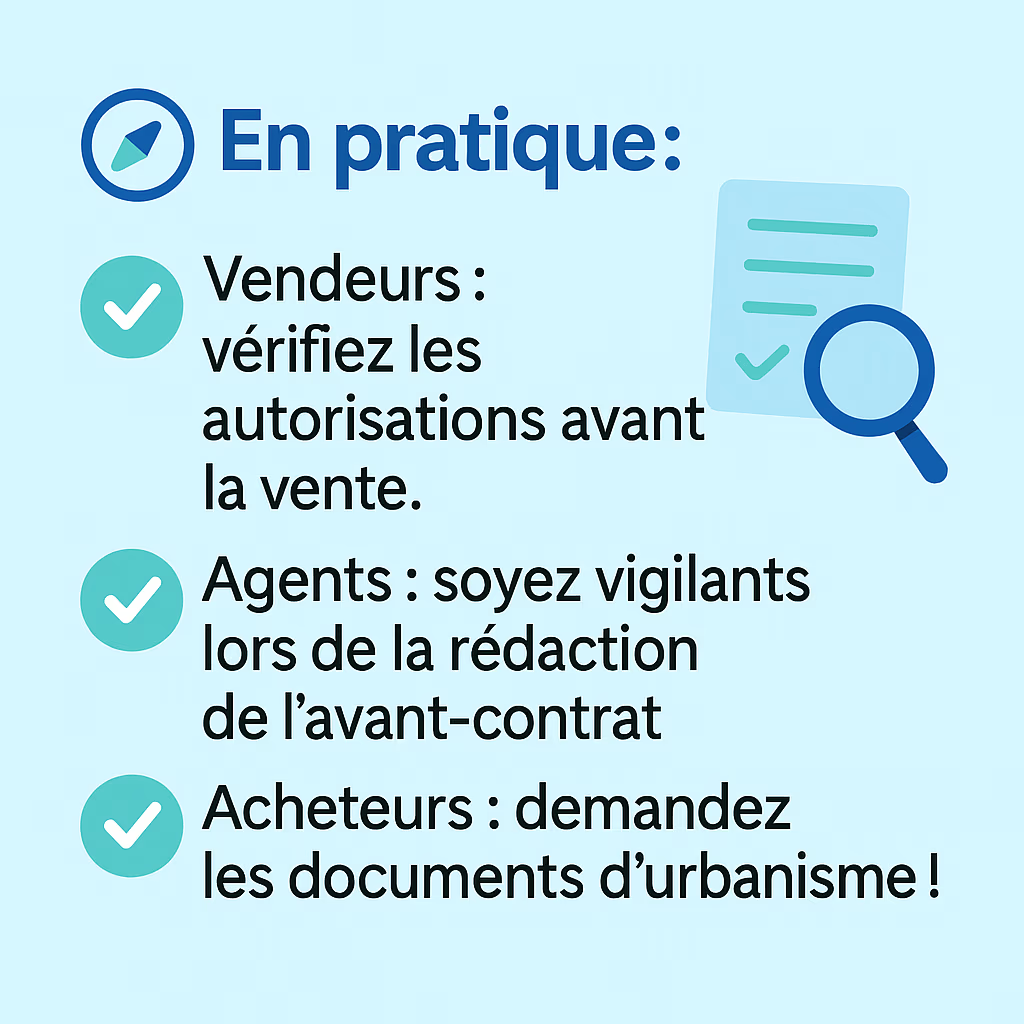
The seller must verify that the property is in compliance with applicable planning rules (building permit, prior declaration and compliance).
-
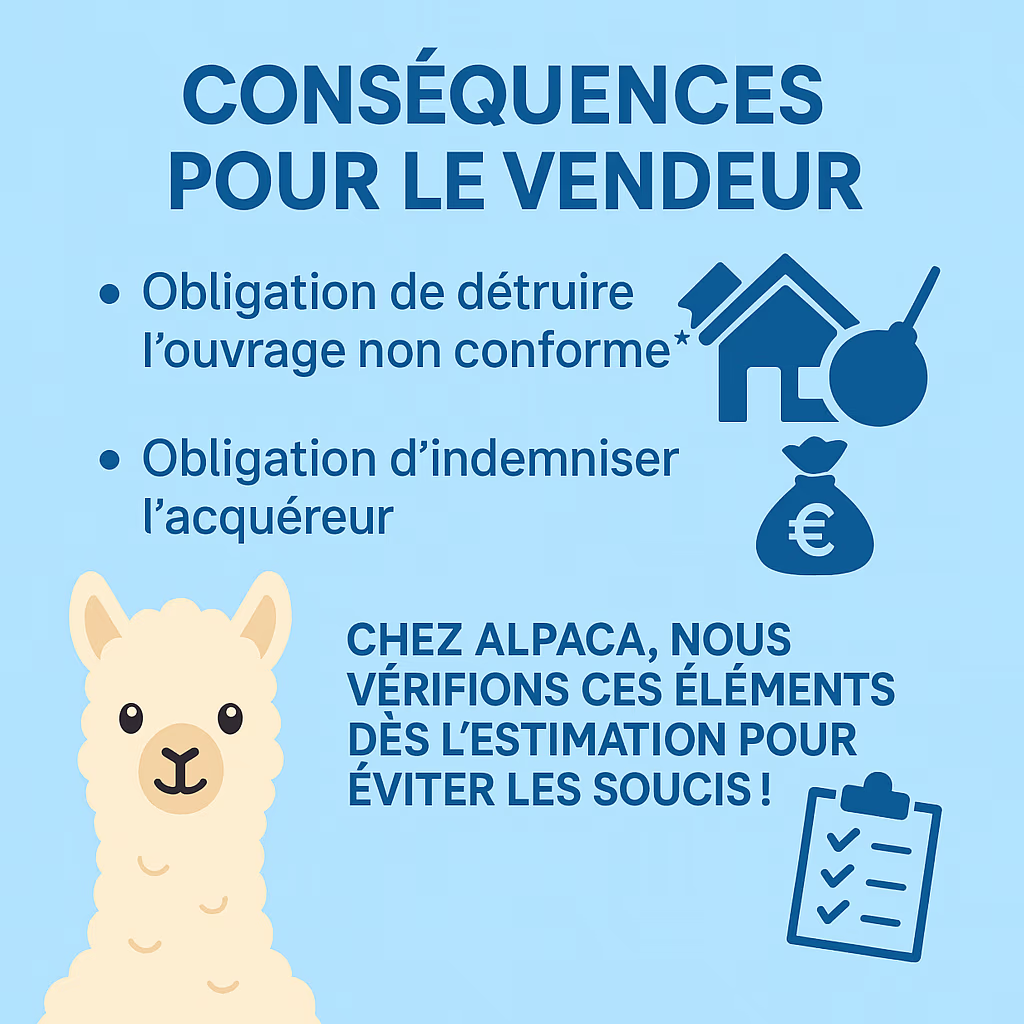
If work has been done without authorization or is irregular, the buyer can turn to the seller for breach of the obligation to deliver: they could request remediation, cancellation of the sale, or damages.
-
The seller cannot simply claim ignorance of the irregularity or argue that the buyer should have verified.
-
This can impact negotiation: the irregularity must be disclosed beforehand, or the price adjusted, or preferably regularized before the sale.
-
For properties for rental use or investment, irregularity carries increased financial risk (remediation, restoration, litigation).

Announcement of a September 2025 Court of Cassation decision informing that the seller can be held liable in case of sale of property non-compliant with planning rules.

The Court of Cassation reminds us that the seller must deliver property in compliance with planning rules, even if they did not carry out the work themselves and even if this is not mentioned in the deed of sale.
Liability of the real estate agent
The Court of Cassation also holds the real estate agent partially liable. They MUST verify the seller's claims and at minimum warn the buyer in case of non-compliance.
At Alpaca Immobilier: we systematically request, when we carry out an appraisal, the building permit/prior declaration documents and the associated compliance certifications to establish our price and guarantee our buyers that the property has no compliance defect.
This Court of Cassation decision marks a welcome turning point: the seller can no longer entirely escape their obligation to deliver conforming goods by invoking the absence of mention in the deed or arguing that they did not carry out the irregular work. Property owners who declare their work and make the effort to request compliance will finally be rewarded over those who carry out work without requesting anything.