Do you have the right to move in with your dog, cat, or dwarf rabbit anyway? Can the landlord evict you if you adopt a companion during the lease?
At Alpaca Immobilier, we know your pet is part of the family. That's why it's crucial to separate fact from fiction, backed by the law, so your rental goes smoothly.
The basic principle: freedom of pet ownership (1970 Law)
Let's start with the good news. In France, for a rental as a primary residence (whether unfurnished or furnished), the law is very protective of tenants.
The article 10 of law no. 70-598 of July 9, 1970 is clear:
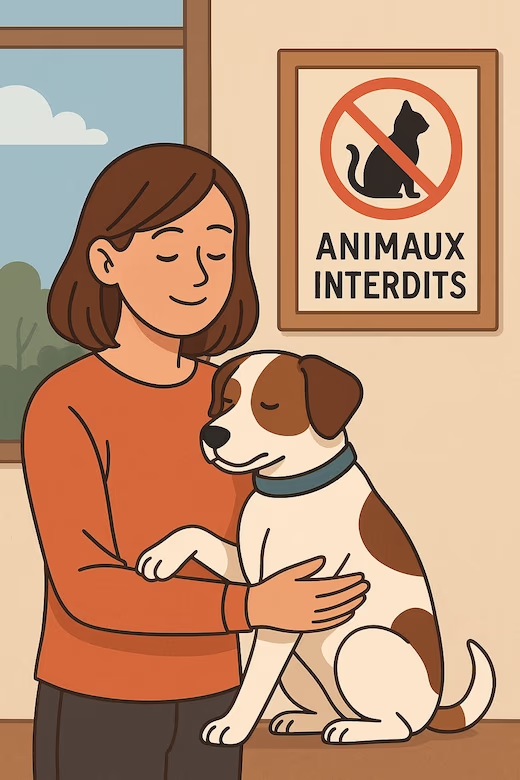
"Any clause tending to prohibit the keeping of an animal in a residential property shall be deemed unwritten insofar as it concerns a domestic pet."
Concretely, this means that even if your lease stipulates "pets not allowed," that sentence has no legal value. You're not even obligated to notify your landlord that you have a pet, as long as it doesn't cause disturbances.
The exceptions where the landlord can say NO
Be careful though, this right is not absolute. There are specific cases where the ban is perfectly legal.
1. First category dogs
The law allows landlords to prohibit the keeping of attack dogs (first category dogs such as unregistered Pitbulls not on the LOF register). If you own a second category dog (guard and defense dogs), the landlord cannot forbid it to you, as long as you comply with keeping rules (permit, insurance, muzzle in common areas).
2. Seasonal rentals (Airbnb type)
This is where the distinction is major. If you rent an apartment for vacation (seasonal tourist rental), the landlord has the right to forbid pets.
In this context, the law of March 22, 2012 modified the Tourism Code: the lessor can perfectly refuse your pet. If you don't respect this clause, the landlord can cancel the rental and keep the deposit. Read the house rules on platforms carefully!
What about Mobility Leases? The mobility lease is hybrid. Although it's short-term (1 to 10 months), it's governed by the 1989 law. Consequently, as with a typical furnished rental, the landlord generally cannot forbid a domestic pet, except if it's a first category dog.
What is a "pet" in the eyes of the law?
We immediately think of dogs and cats. But what if you have a more... unusual companion?
Case law considers "domestic pets" to be common domestic animals. This includes NAC (New Pets/Exotic Pets) like hamsters, rabbits, or fish.
But beware of "exotic" or farm animals. If you decide to raise a goat or a pig in your apartment, the situation gets complicated.
-
Animal welfare: the space must be appropriate. A court could consider that an apartment is not a decent place for a goat.
-
Dangerous animals: the keeping of wild or dangerous animals (certain reptiles, spiders, scorpions) is strictly regulated or even prohibited without a certificate of competency. The landlord can legitimately oppose their presence for safety reasons.

The important limit: nuisances and damage
If the landlord cannot forbid you from having a pet, he can still act if that pet causes problems. It's the flip side of your freedom.
You are responsible for your pet's actions. The landlord (or the property management company) can intervene if your pet causes:
-
Noise nuisances: constant barking day and night.
-
Odor nuisances: poor hygiene impacting neighbors or common areas.
-
Damage: scratches on doors, destruction of the property's green spaces.
In case of abnormal disturbances to the neighborhood being established, the landlord can even request judicial lease termination.
The Article 1243 of the Civil Code sets the framework:
"The owner of an animal, or the person using it while it is in his use, is responsible for damage caused by the animal, whether the animal was under his custody or was lost or escaped."
Insurance and damage: who pays what?
When you leave the property, the move-out inspection will be compared to the move-in inspection.
-
Rental damage: if your cat has turned the wallpaper into a work of art or if urine has stained the hardwood, you pay. The landlord will withhold necessary amounts from your security deposit. If that's not enough, they can claim the rest from you.
-
Home insurance (MRH): this is an essential point.
Your Multi-Risk Home Insurance (MRH) policy mandatorily includes Civil Liability Coverage. This covers damage caused by your pets to third parties (if your dog bites a neighbor or breaks the neighbor's vase). Additional coverages also exist.- Caution: check your policy carefully for damage to the rented property itself. Often, tenant liability coverage covers major damage (fire, water damage), but not always "minor" fixture damage caused by animals.
In summary
To keep it simple and stay on good terms with your landlord:
-
In primary residence rental (unfurnished or furnished), yes, you can have a pet (except attack dogs).
-
In seasonal rental: the landlord decides.
-
You remain 100% responsible for damage and noise.
At Alpaca Immobilier 🦙, we believe that transparency is the key to a successful rental. If you have a large dog, it's often better to be upfront from the start to build trust, even if the law is on your side!
Legal sources: Article 10 of Law no. 70-598 of July 9, 1970 as amended by Law no. 89-462 of July 6, 1989; Rural and Maritime Fishing Code.