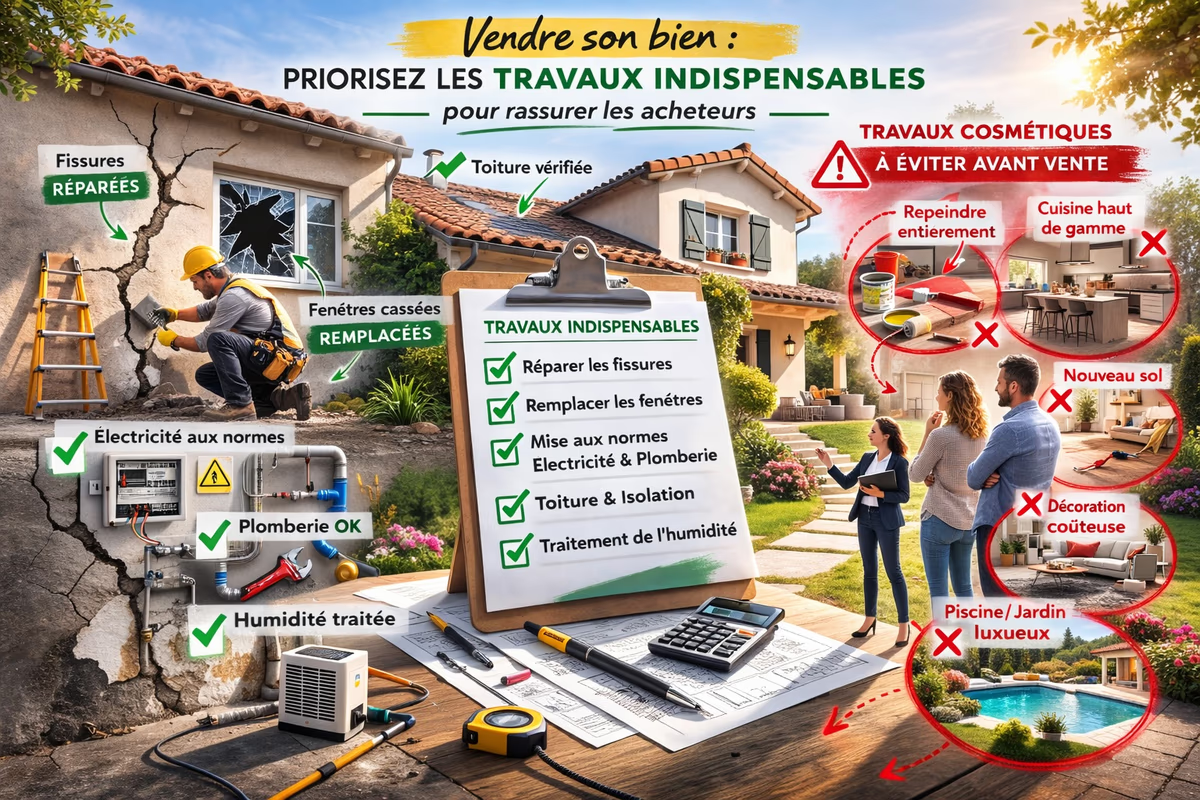
In the real estate sales process, it is crucial to distinguish between essential repairs and superfluous improvements to reassure buyers without overloading the property. In this article, we analyze for you how to prioritize major repairs, such as cracks or broken windows, while avoiding spreading yourself thin on aesthetic work that may hinder the sale or fail to generate added value. Adopting this approach allows the seller to effectively enhance their property while meeting the expectations of future buyers.
The Importance of Prioritizing Repairs Before Sale to Optimize Property Valuation
Understanding the Role of Repairs in Buyer Perception
It is essential to understand that repairs performed before listing significantly influence buyer perception. Visible and reassuring repairs, such as crack repair or roof modernization, can strengthen confidence in the soundness of the investment. However, it is important to keep in mind that the goal is not to completely transform the property, but to enhance its intrinsic qualities while mitigating its defects.
Avoiding Work Overload to Preserve Profitability
Doing work on your home before selling it can quickly become a trap if you do not properly prioritize. The temptation to renovate, repaint, or modernize everything excessively risks increasing transaction costs or reducing profitability. It is therefore crucial to distinguish what is essential to reassure the buyer from what constitutes superfluous improvements, often costly and with low returns in a sales context.
Do not forget, for example, that a buyer will pay approximately 8% in "notary fees," so if you intend to "pass on" the work costs to them, they will still pay 8% more than if they had done the work themselves.
Identifying Essential Repairs to Reassure and Secure the Transaction
The main objective is to secure the transaction by eliminating elements that could make a buyer hesitant or lead to difficult negotiations. Repair of structural cracks, electrical or plumbing compliance, or repair of broken windows are all work that strengthens the credibility of the property and reassures the future buyer. These interventions also contribute to improving the property's energy performance, an increasingly determining criterion in real estate purchases.
Small daily maintenance tasks are also helpful: replace a light bulb or fix a leaky faucet, for example.
Essential Repairs
Repairing Cracks and Structural Deterioration
Cracks, especially those appearing on load-bearing walls or in foundations, should be addressed with priority. Their presence may indicate serious structural problems, affecting the safety and stability of the building. Ignoring these defects could cause a sale to fail or significantly lower the selling price.
Replacing or Repairing Defective Fixtures
Defective or broken windows harm thermal and sound insulation and can also give an impression of neglect. Their replacement or repair is an essential step to improve the house's energy performance, which constitutes a strong selling argument, particularly in the context of regulations on improving the home's energy rating.
However, be careful: if you are considering modernization work to improve the home's energy rating, keep in mind what we mentioned earlier about the additional costs related to transfer taxes. Some buyers may also be eligible for government assistance such as MaPrimeRénov to improve the property.
Ensuring Electrical and Plumbing Compliance
A compliant electrical installation and functional plumbing are fundamental elements to reassure the buyer. Remember to provide invoices or redo a diagnostic if the previous one indicated defects. In some cases, such as autonomous sewage systems, you will need a new favorable opinion from the SPANC.
Modernizing or Repairing the Roof if Necessary
A roof in good condition is synonymous with safety and longevity. If deterioration or water infiltration is detected, their repair should be prioritized. This avoids higher costs in the medium term and reassures the buyer about the soundness of the property. Interior damage can be covered by your home insurance. The benefit of the compensation may also go to the buyer.
Checking and Treating Humidity or Water Infiltration
Humidity can cause health problems and deteriorate the property structure. Treating it before listing is essential to enhance the property and avoid difficult negotiations.
If Work Must Be Done: Have It Done Properly!
Our main advice is that if you have damage repaired, do it officially with a reputable company that will provide you with an invoice and a ten-year guarantee certificate. In the most significant cases, work damage insurance may also be necessary.
If you repair it yourself or have it done illegally, your liability could be pursued and upheld by a court in case of serious damage.
Avoiding Superfluous Work
Do Not Focus on Non-Essential Aesthetic Work
Repainting your home before sale or undertaking costly decorative work should not be a priority. Buyers will probably want to personalize the decor, and your taste is not necessarily theirs.
What matters is presenting a clean, neutral interior in good general condition. For example, remove walls with faded or garish colors, nothing more.
Limiting Costly Renovations That Don't Provide Immediate Added Value
Costly renovations, such as complete kitchen or bathroom renovations, may not be recouped in the selling price. It is often wiser to make small targeted improvements or leave these tasks to the buyer. The negotiation or price reduction that the buyer's plan for a bathroom renovation represents, for example, will always be less than what it would cost you. Moreover, you exclude all future liability, risk of disputes with contractors, etc. So the issue is not just financial.
Strategies to Reassure Buyers Without Overload
Highlighting Work Performed and Its Impact on Safety
During the viewing, it is useful to present a complete file of repairs performed, particularly those that improve energy performance or safety. This reassures the buyer about the quality of the property. Proof of maintenance is also clearly a plus (for example, regular maintenance of air conditioning, water softener, or pool water quality).
Providing a Complete File of Repairs Performed
A recent property inspection, accompanied by invoices or work certificates, testifies to the seller's transparency and facilitates negotiation.
Highlighting the Overall Condition of the Property by Emphasizing Its Soundness and Compliance
Highlighting electrical compliance, insulation, or structural stability helps reassure the buyer and justify the asking price.
Ultimately: show that you have nothing to hide.
Conclusion
Prioritize the Essential to Reassure Without Overloading
Doing work on your home before selling it should primarily aim to secure and enhance the property without going overboard. Prioritizing interventions allows you to optimize energy performance, safety, and the overall perception of the property.
Valuing the Property in a Realistic and Strategic Manner
A strategic approach, focused on essential repairs, allows you to sell at the best price while avoiding unnecessary costs. Transparency and highlighting work performed strengthen buyer confidence.
Prepare to Meet Buyer Expectations While Avoiding Unnecessary Work
By adopting a targeted approach, the seller can meet market expectations, particularly in cities like Montpellier, Saint-Clément-de-Rivière, Jacou, Clapiers, or Saint-Gély-du-Fesc, where energy performance and regulatory compliance play a key role in this particularly demanding market.